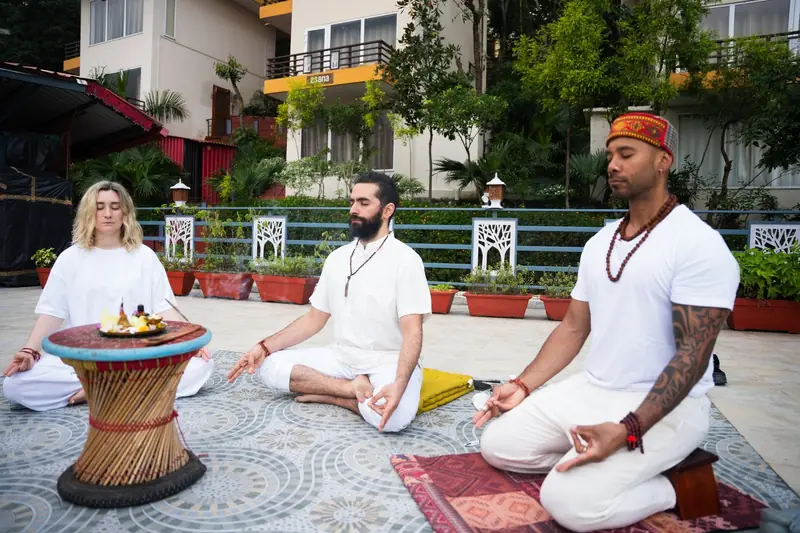
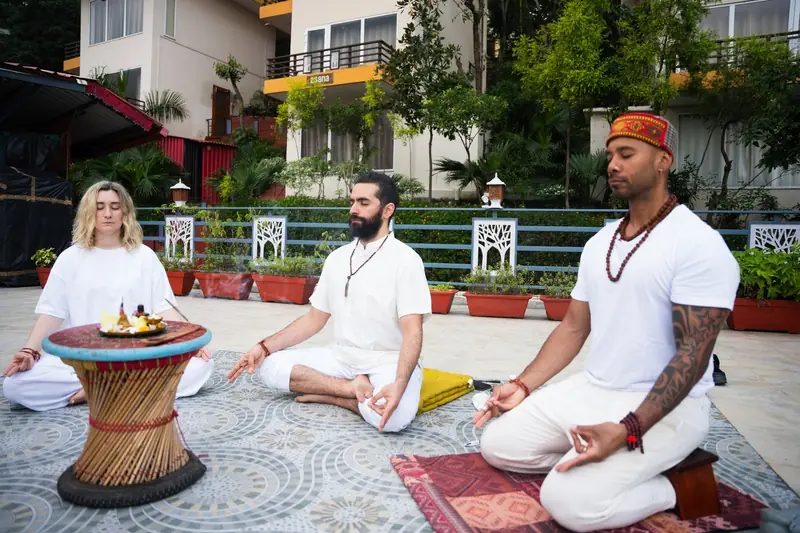
What is Yoga?
Listen to this episode on Spotify →
Yoga is much more than a physical practice—it’s an ancient path woven from experience, philosophy, history, and culture. Explore the many layers of yoga and discover how this timeless tradition can inspire your own journey of self-discovery.
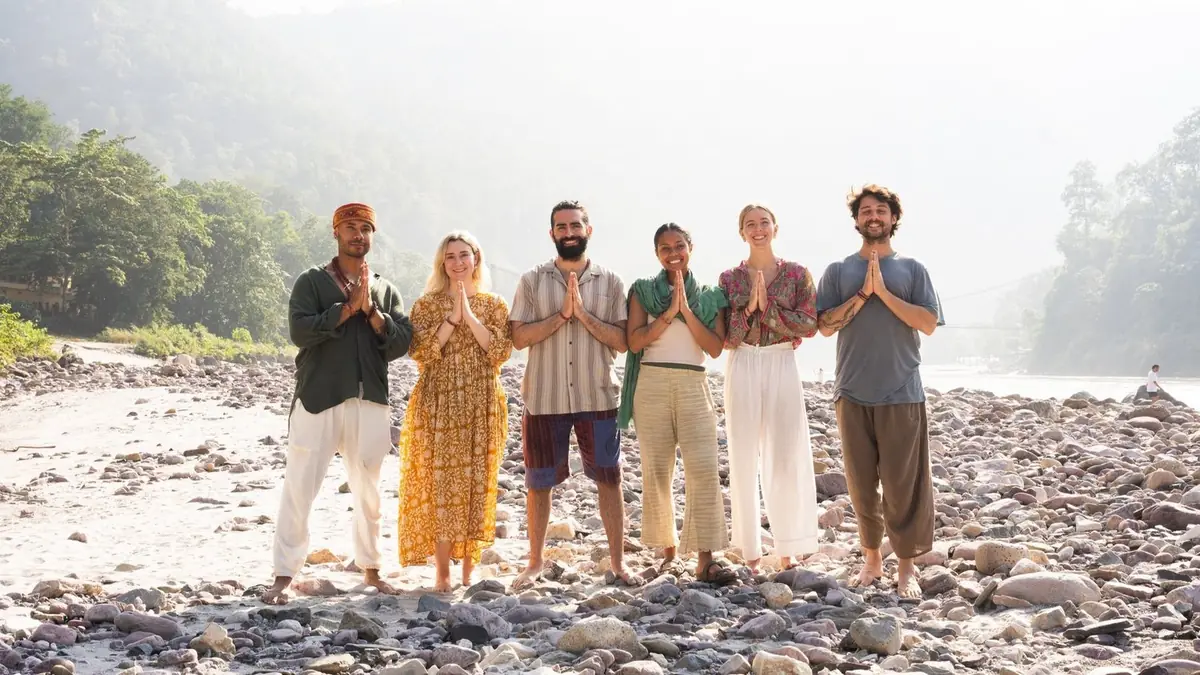
(Pictured: 300 Hr YTT graduates by the Ganges River, Rishikesh)
What is Yoga? Unraveling the Layers of Practice, History, and Culture
Yoga is often described as a practice, a philosophy, a tradition, or even a way of life. But what is yoga, really? Depending on who you ask, you may receive vastly different answers. Some may say it is a physical exercise, while others claim it is a state of consciousness, a spiritual path, or a philosophy rooted in history. The truth is, yoga is all of these things—and more.
In this blog, we explore four fundamental aspects of yoga: Yoga as an Experience, Yoga as a Practice, Yoga as a History, and Yoga as a Culture.
Yoga as an Experience
Yoga is often translated as union, derived from the Sanskrit root yuj (युज्), meaning "to yoke" or "to unite." But union with what?
According to the Yoga Sutras of Patanjali, yoga is a state of deep stillness where the fluctuations of the mind cease, revealing the underlying awareness that is always present.
योगश्चित्तवृत्तिनिरोधः
Yogaś citta-vṛtti-nirodhaḥ
Yoga is the stilling of the fluctuations of the mind. — Yoga Sutras 1.2
This state of still awareness—where we become the observer rather than the identified participant in our thoughts—is often described as the goal of yoga.
When we touch this state, we experience yoga beyond the techniques we practice. It is not something external to be obtained, but an ever-present reality that is simply obscured by the movement of the mind.
Yoga as a Practice
While yoga as a state is its highest goal, there are countless paths to reach this experience. The Bhagavad Gita describes different approaches to yoga based on individual temperament:
Jnana Yoga (ज्ञान योग) – The path of wisdom and self-inquiry.
Bhakti Yoga (भक्ति योग) – The path of devotion and surrender.
Karma Yoga (कर्म योग) – The path of selfless action.
Raja Yoga (राज योग) – The path of meditation and mental discipline.
In modern times, yoga is often associated with asana (postures), but traditional yoga includes meditation, breathwork (pranayama), mantra chanting, philosophy, and ethical living as essential components of the practice.
As the Hatha Yoga Pradipika explains:
शरीरं धार्यते येन स ध्यानं धार्यते तथा |
Śarīraṁ dhāryate yena sa dhyānaṁ dhāryate tathā
The body is maintained by that which maintains meditation. — Hatha Yoga Pradipika 1.66
Yoga postures are not an end in themselves, but a way to prepare the body and mind for meditation.
View this post on InstagramA post shared by Traditional Hatha Yoga, Meditation & Ayurveda (@omsom.yoga)
The History of Yoga
The history of yoga is as complex and diverse as the practice itself. The first references to yoga can be traced back over 5,000 years to the Vedic texts, particularly the Rig Veda and the Upanishads, which explore meditation, consciousness, and the nature of the self.
The most well-known historical texts on yoga include:
The Upanishads (800–200 BCE) – Philosophical explorations of the self.
The Bhagavad Gita (c. 200 BCE) – A spiritual dialogue on dharma and the paths of yoga.
The Yoga Sutras of Patanjali (c. 200 CE) – A systematic guide to meditation and spiritual practice.
The Hatha Yoga Pradipika (15th century) – A foundational text on physical yoga practices, including asanas and pranayama.
Over time, yoga has evolved through different cultural influences, from the renunciate traditions of the early ascetics to the householder-friendly practices we see today.
Yoga as a Culture
Beyond history and practice, yoga is a living, breathing culture that continues to evolve. From traditional Indian lineages to the modern yoga studio, the way we engage with yoga today is influenced by social, political, and economic factors.
Yoga’s cultural expressions include:
The etiquette of removing shoes before practice.
Rituals such as placing the head toward an altar.
The influence of social media in shaping how yoga is perceived and shared.
The ethics of teaching and accessibility in the yoga community.
Understanding the culture of yoga helps us appreciate the diverse ways in which people engage with the practice, while also prompting us to ask questions about authenticity, adaptation, and respect.
Final Thoughts
Yoga is not just one thing. It is an experience, a practice, a historical tradition, and a living culture.
Whether we seek physical health, mental clarity, spiritual connection, or all of the above, yoga provides a vast landscape for self-exploration. By engaging with its many layers, we honour the tradition while making it meaningful for our own lives.
As the Katha Upanishad reminds us:
उत्तिष्ठ जाग्रत प्राप्य वरान्निबोधत |
Uttiṣṭha jāgrata prāpya varān nibodhata
Arise, awake, and seek the highest wisdom. — Katha Upanishad 1.3.14
May our yoga practice continue to inspire inquiry, growth, and connection to our highest self.
Want to Learn More?
Listen to the full episode, What is Yoga? on the Om Som Yoga & Ayurveda podcast for a deep dive into timeless wisdom.
Ready to deepen your asana practice? Join our upcoming 200 Hr Hatha Yoga Teacher Training (October 2025)— six months of nourishing asana, meditation, and Ayurvedic wisdom designed to help you cultivate a healthy body, calm mind and a strong purpose.