Vikṛti - Understanding Imbalance in Ayurveda

Listen to this episode on Spotify →
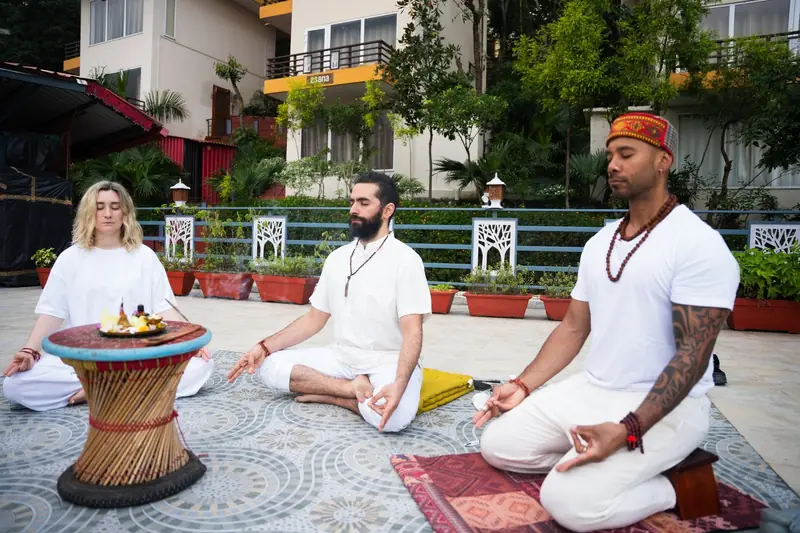
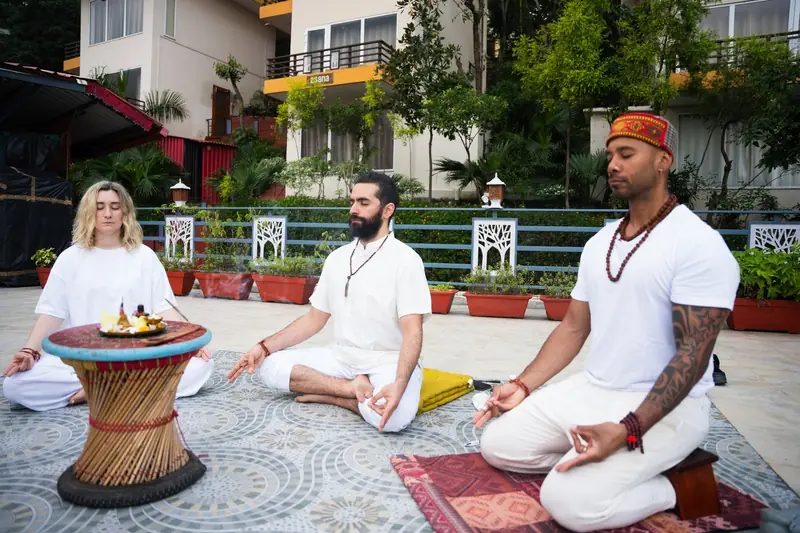
Pictured: Aaron teaching Shitali Pranayam
Vikṛti is the crooked mirror, a temporary distortion that shows where we’re out of alignment, not who we truly are.
What is Vikṛti?
In Ayurveda, Vikṛti refers to your current state of imbalance, the way the doṣas (Vāta, Pitta, Kapha) are expressing themselves in disharmony. It’s different from Prakṛti, your original constitution, which remains stable throughout life.
As Paige explains in the podcast:
“Vikruti is the state of imbalance and how Ayurveda helps us identify and address what’s out of alignment in the body, the mind and the emotions.”
The Crooked Mirror Analogy
Aaron shares a simple way to understand Vikṛti:
“Imagine a warped mirror at a festival. You look into it and see yourself distorted — stretched tall, squashed short, or bent out of shape. That reflection isn’t who you really are. It’s just how things are appearing in that moment.”
Vikṛti is this crooked mirror, not your true nature, but a reflection of your current state. The practice of Ayurveda is the alchemy that helps melt and straighten that mirror, restoring balance.
Why We Are Not Our Diagnoses
One of the most empowering teachings of Ayurveda is learning not to over-identify with illness. Paige reflects:
“I used to say, ‘I’m having one of my migraines.’ That language made the migraines part of my identity. But they were actually just a distortion, not who I really was.”
By shifting language — from “I have migraines” to “I am currently experiencing a migraine” — we remind ourselves that imbalance is temporary and not a definition of self.
The Sanskrit Breakdown
Like Prakṛti, Vikṛti contains the root kṛti (creation, action). The prefix vi means separation, opposition, or distortion.
Prakṛti – “before creation,” your original state of balance.
Vikṛti – “opposing creation,” a distortion away from your natural health.
Aaron adds:
“If Prakṛti is pre-life, pre-karma, your original nature, then Vikṛti is opposing life, opposing nourishment. It’s a deviation away from balance.”
Causes of Vikṛti
The Charaka Saṃhitā defines Vikṛti as “the altered or disturbed state of the doṣas.” This can be caused by:
Incompatible diet – eating foods unsuited to your constitution.
Improper routines – poor daily or seasonal rhythms (Dinacharya and Ritucharya).
Misuse of wisdom – ignoring what you know is good for you.
Time & environment – seasonal shifts, climate, age, or work/life conditions.
Stress & lifestyle factors – overwork, trauma, poor sleep or emotional suppression.
Paige notes:
“We don’t need to wait until disease is established. Imbalance shows up in subtle signs first - in digestion, mood, sleep or energy. These are signals, not problems.”
How to Recognise Vikṛti
Vikṛti can shift hour to hour, season to season. Common signs include:
Feeling “off” or unlike your natural self.
Craving foods or habits that worsen imbalance (e.g. ice cream during a Kapha cold).
Yoga practice feeling different (losing balance, less energy, unusual tension).
Minor digestive changes, sluggishness, irritability or fatigue.
As Aaron puts it:
“Your yoga practice is the mirror. If the reflection is distorted, you can know that there’s some kind of imbalance there.”
Returning to Balance
The Ayurvedic principle is simple: like increases like, opposites bring balance.
If symptoms feel hot → bring in coolness.
If symptoms feel heavy → bring in lightness.
If symptoms feel unstable → bring in steadiness.
“Identify your symptoms, compare them to your Prakṛti, then introduce opposing qualities to return to balance,” says Aaron.
Sometimes this is as simple as adjusting diet or rest and sometimes it requires the guidance of a practitioner.
The Root of Ayurveda
A classical verse summarises it beautifully:
Doṣa-Prakṛti-Vikṛti-Vijñānam Āyurveda-Mūlam
“The knowledge of constitution and imbalance is the root of Ayurveda.”
Paige reflects:
“That’s really it. Ayurveda is the science of life. Do less of the things you know hinder you, do more of the things you know support you. Sometimes it’s that simple.”’
Want to Learn More?
Listen to the full episode, Vrikruti Understanding Imbalance in Ayurveda, on the Om Som Yoga & Ayurveda podcast for an in-depth discussion of this vital dosha.
Ready to root your yoga practice in tradition? Join our upcoming 200-Hour Hatha Yoga Teacher Training (October 2025) in Berwick, Victoria — a six-month immersive journey grounding you in the principles of Hatha Yoga, Ayurveda, and the elements.