Prakṛti - Discovering Your Original Nature in Ayurveda

Listen to this episode on Spotify →
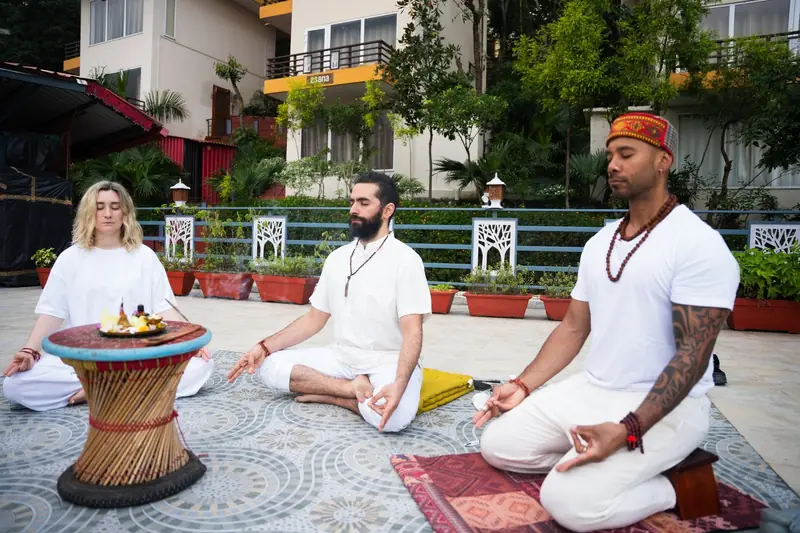
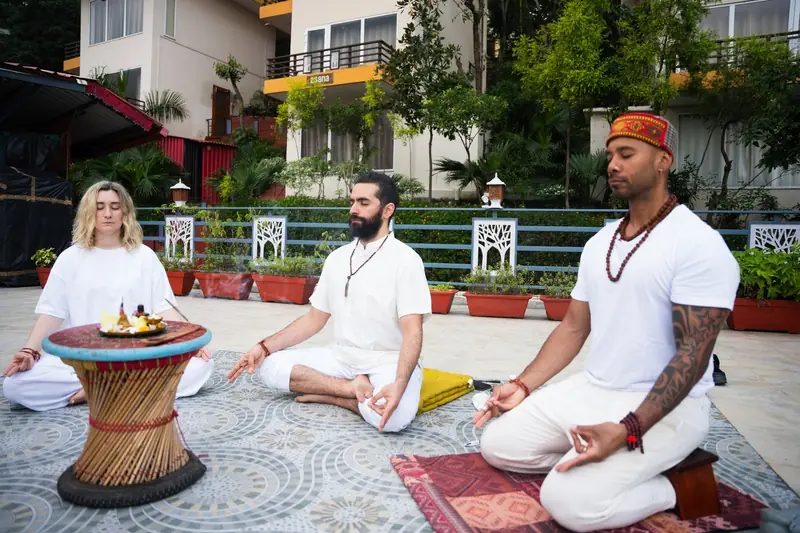
Pictured: Soilau practicing by the Ganges River, Rishikesh
Prakṛti is your original blueprint, the unique balance of doṣas you were born with.
What is Prakṛti?
In Ayurveda, Prakṛti refers to your innate constitution, the unique balance of Vāta, Pitta and Kapha you were born with. Unlike Vikṛti (imbalance), Prakṛti is your natural state of health, formed before life’s influences shaped you.
As Paige explains in the podcast:
“Prakṛti is kind of like your unique and original constitution of the doṣas, your blueprint for how you are, the way you were created before life had any influence.”
An Analogy: The Three Seeds
Aaron shares a powerful analogy to help us understand Prakṛti:
“Imagine three seeds planted in the same soil, nourished by the same water and sun. One grows tall and fast toward the light, another grows wide and grounded and the third twists and sways delicately in the wind. They’re all the same species, yet each expresses itself completely differently.”
This is how Prakṛti works. We may live in the same environment, but each of us carries a distinct balance of doṣas that shapes our body, mind and spirit.
The Meaning of Prakṛti
The Sanskrit breakdown reveals its depth:
Pra (प्र) – before
Kṛti (कृति) – action, creation, doing
Prakṛti literally means “before action” -y our state of balance before life experiences, diet, upbringing or environment began to shape you.
Aaron explains:
“Prakṛti is pre-action, pre-karma, pre-life. It’s the way you were created in this universe, your original nature.”
View this post on InstagramA post shared by Traditional Hatha Yoga, Meditation & Ayurveda (@omsom.yoga)
What the Texts Say
Ayurveda’s classical texts give clear insight into Prakṛti:
Charaka Saṁhitā: “Prakṛti is the inherent combination of the doṣas that exist in a stable state within the body.”
Aṣṭāṅga Hṛdayam: “The union of body, senses, mind and self is what sustains life.”
Together, these verses remind us that reconnecting to our original nature sustains not only health but also clarity, purpose and fulfilment.
Types of Prakṛti
Everyone has a unique constitution, but Prakṛti is usually expressed in three ways:
Single Doṣa Predominance: e.g., 80% Vāta, 10% Pitta, 10% Kapha
Dual Doṣa Predominance: e.g., Vāta-Pitta (40/40/20) or Kapha-Pitta
Tri-Doṣic: balanced in all three doṣas
While being tri-doṣic may sound ideal, Aaron cautions:
“If you’re tri-doṣic, all three doṣas are just as likely to go out of balance. Sometimes it’s easier to manage one predominance than to balance all three at once.”
Why Understanding Prakṛti Matters
Knowing your Prakṛti helps you:
Choose the right diet and lifestyle to support your health
Understand your strengths and vulnerabilities
Align with your dharma, your unique way of showing up in the world
Avoid the trap of comparison and unrealistic ideals
As Paige reflects:
“Through Ayurveda you can stop fighting with how you are and start working with the way you are. That’s the liberating part.”
Practical Ways to Explore Your Prakṛti
Reflect on consistent traits across your life (body type, digestion, emotional tendencies).
Notice what feels most like you versus what feels like imbalance.
Work with an Ayurvedic practitioner who can guide you through pulse reading and consultation.
Experiment with yoga, food and lifestyle choices that support your constitution.
Aaron shares:
“Balance Vāta, balance Pitta, balance Kapha but always with the awareness of what your original nature is. That’s your compass back to health.”
Want to Learn More?
Listen to the full episode, Prakṛti: Discovering Your Original Nature in Ayurveda, on the Om Som Yoga & Ayurveda podcast for an in-depth discussion of this vital dosha.
Ready to root your yoga practice in tradition? Join our upcoming 200-Hour Hatha Yoga Teacher Training (October 2025) in Berwick, Victoria — a six-month immersive journey grounding you in the principles of Hatha Yoga, Ayurveda, and the elements.