Jala—The Water Element in Yoga & Ayurveda
Listen to this episode on Spotify →
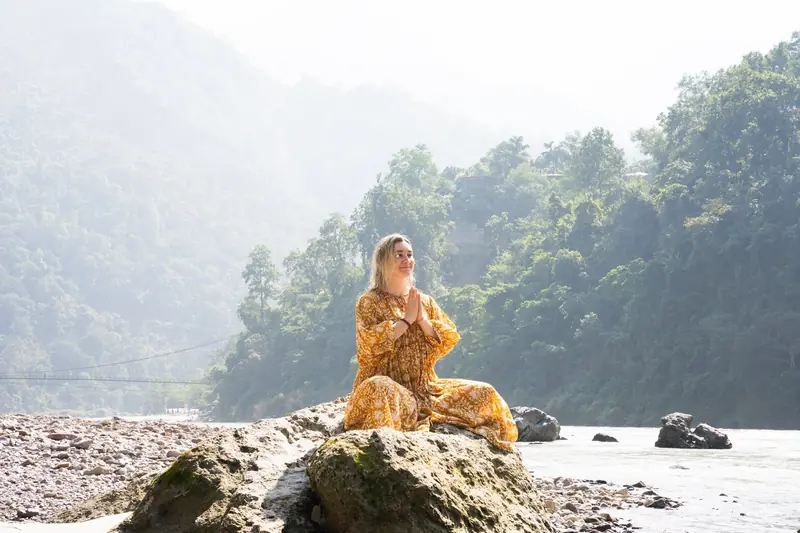
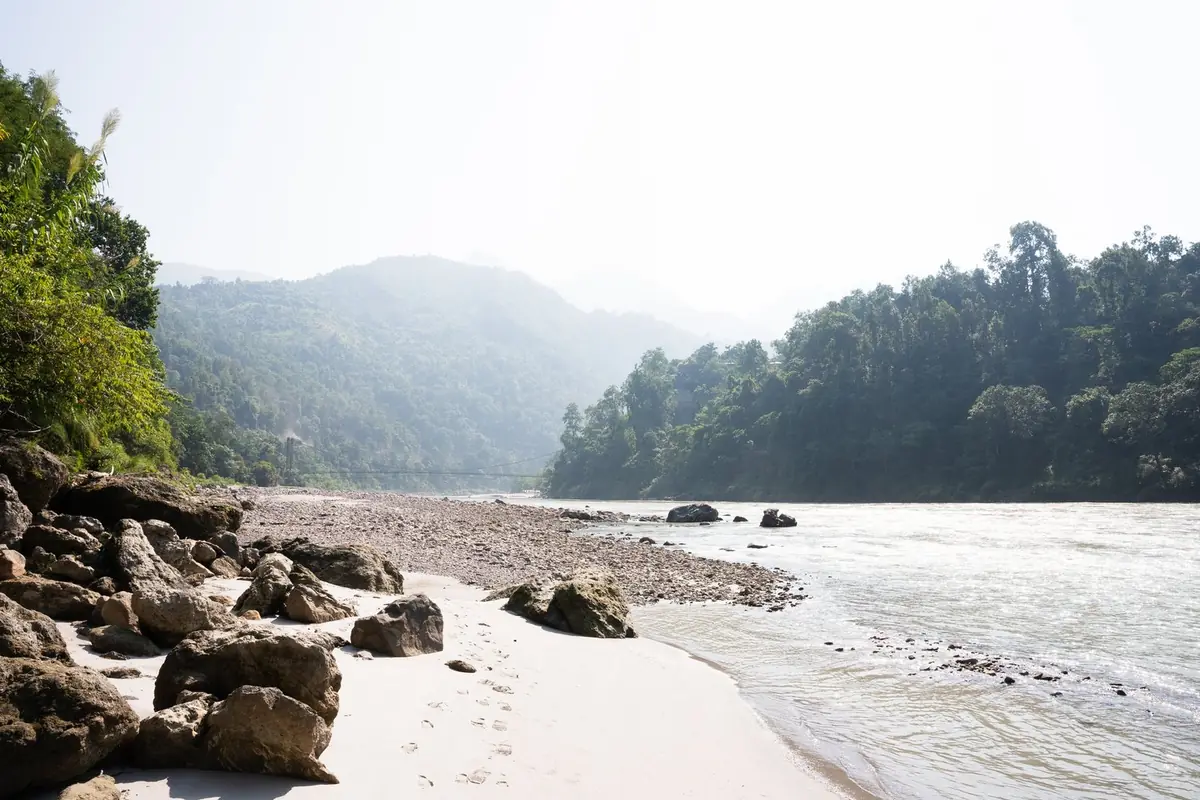
(Pictured: Ganges River, Rishikesh)
Water — Jala in Sanskrit — is the lifeblood that flows through all beings. It is fluid, nourishing, cohesive, and powerful. In this blog, we explore the essence of the water element (Jala Tattva), its qualities, imbalances, and practical ways to cultivate balance through your yoga and Ayurvedic practice.
What is Jala Tattva
In both yoga and Ayurveda, Jala represents water — one of the five great elements (Pañca Mahābhūtas). It is fluid, soft, cool, and slow, yet carries great strength. Water flows, nourishes life, and connects us all. Unlike the earth element's solidity, water moves gracefully yet can be fierce, capable of both sustaining and transforming.
The water element governs all the fluids in the body — blood, lymph, joint fluid, and reproductive fluids — as well as our emotional flow and connection.
Varuna Deva: The Deity of Water
In Vedic tradition, the water element is personified by Varuna Deva, the god of oceans and sacred waters. Varuna is both a judge and a compassionate guardian, overseeing the purity and flow of water, and by extension, the health of the land and people.
Varuna’s association with water reminds us that the state of our waterways reflects the health of our environment and ourselves. Protecting water means protecting life.
Qualities of the Water Element
The Gurvadi Guna system lists qualities or “pairs of opposites” that describe natural phenomena. For the water element, these include:
Liquid — flowing and adaptable
Oily / Unctuous — moist and nourishing
Cool / Cold — calming and soothing
Soft — gentle and yielding
Slow — deliberate and unhurried
These qualities manifest physically as hydration, fluidity, and emotional adaptability.
Signs of Imbalance in Water
Excess Water
When water is excessive in the system, one might feel emotionally overwhelmed, overly sentimental, or attached to physical possessions. Physically, excess water shows as mucus buildup, fluid retention (swelling in joints or ankles), slow digestion, and lethargy.
Deficiency of Water
A lack of water leads to dryness — dry skin, dry cough, brittle nails, and a lack of emotional connection or joy. This manifests as rigidity in personality, difficulty expressing emotions, and feelings of being “dry” or disconnected.
View this post on InstagramA post shared by Traditional Hatha Yoga, Meditation & Ayurveda (@omsom.yoga)
Cultivating Water Element Balance Through Practice
Yoga (Asana)
Focus on fluid, gentle, undulating movements rather than rigid or fiery postures. Circular joint rotations and flowing sequences, like those in lunar or restorative practices, embody the water element.
Examples:
Slow, soft undulations of arms and spine
Circular wrist and ankle rotations
Gentle hip circles and pelvic tilts
Pranayama (Breathwork)
Use cooling and hydrating breath techniques such as:
Shitali pranayama (curling the tongue and sipping air as through a straw) — cools and hydrates the system
Nadi Shodhana (alternate nostril breathing) — balances the prana flow
Meditation
Focus on the Svadhishthana Chakra (located near the pelvis), which is linked to the water element. Meditate on the mantra Vam (the seed sound of water), or visualise a moist white lotus or crescent moon in the pelvic area.
Bringing Water Into Your Daily Life
Drink warm, high-quality water or herbal teas infused with hydrating herbs like fennel or marshmallow root.
Immerse yourself in natural bodies of water: oceans, rivers, lakes, or even moonlight baths.
Practice Abhyanga — self-massage with oils — to nourish the skin and increase the unctuous (moist) quality of water.
Express your emotions openly, journal your feelings, and cultivate fluidity in relationships.
Why Water Matters
Water connects us — at a cellular level and in community. It fosters emotional adaptability, healing, and connection to nature. Honouring the water element reminds us to stay hydrated, both physically and emotionally, nurturing our flow in life.
Want to Learn More?
Listen to the full episode, Jala: The Water Element in Yoga & Ayurveda on the Om Som Yoga & Ayurveda podcast for a deep dive into how the water element shapes our body, mind, and practice.
Ready to root your yoga practice in tradition? Join our upcoming 200-Hour Hatha Yoga Teacher Training (October 2025) in Berwick, Victoria — a six-month immersive journey grounding you in the principles of Hatha Yoga, Ayurveda, and the elements.