Iccha Shakti: The Sacred Desire That Creates Worlds

Listen to this episode on Spotify →
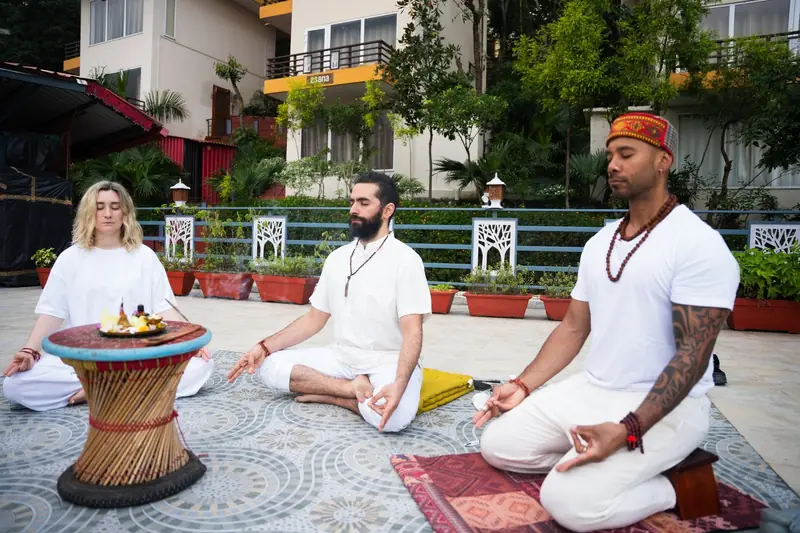
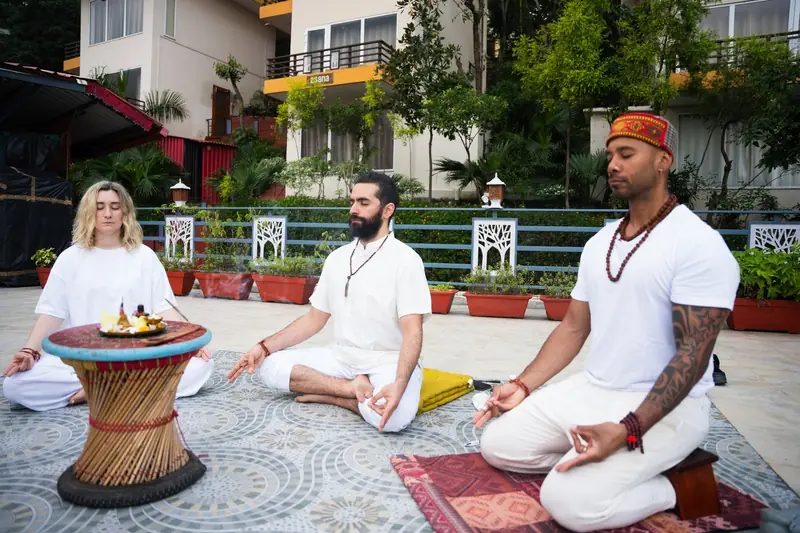
Pictured: Aaron sitting in meditation
Somewhere along the way, most of us picked up the idea that wanting is a spiritual problem. Renounce desire. Want less, be content. Whole shelves of spiritual advice rest on that instruction, and for many sincere practitioners it quietly becomes a low-grade war against their own aliveness.
The Tantras say the opposite. In the Trika philosophy of Kashmir Shaivism, the universe itself begins with a wanting. That first stirring is called iccha shakti, the power of desire, the first of the three powers through which consciousness brings worlds into being. Without it, nothing manifests. Not the cosmos, and not your morning.
This changes the work. The task is not to silence wanting. It is to recognise wanting itself as the divine moving through you, and to learn to tell the difference between the surface cravings that pull us around and the deeper pull that has been drawing us all along.
What Is Iccha Shakti?
Iccha Shakti (इच्छाशक्ति) joins two words. Iccha, from the verbal root iṣ (इष्), means to wish, to desire, to long for. Shakti, from the root śak (शक्), means power or capacity. Iccha shakti is the power of wanting itself: not any particular want, but the first movement of will before it has found its object.
In the Trika (threefold) system of Kashmir Shaivism, it is the first of three powers through which the divine manifests. Iccha shakti is the desire. Jnana shakti is the knowing of what is desired. Kriya shakti is the action that brings it into form. Three powers that create one universe.
Two clarifications the episode is careful to make. First, when this tradition says Shiva, it is not primarily speaking of the deity; the deity is the personified form of everything, the total consciousness within which all of this unfolds. Second, iccha shakti is not ego desire. It is not the craving for hot chips or a new phone. It is a universal impulse, divinity expressing itself as desire, something that moves through you rather than something that belongs to you.
Before the Universe, a Wanting
The Trika texts tell the story like this. Before there is any manifestation, there is Shiva at rest. Absolute, undivided, complete. Nothing is missing and nothing is happening. Shiva exists as the great void, everything and nothing simultaneously.
Then, from within that stillness, something arises. A pure, spontaneous desire with no cause behind it: the desire to know itself as another. That first stirring is iccha shakti. From it arises jnana shakti, the knowing of what will be willed into existence. And from that knowing arises kriya shakti, the action that brings it into form.
Here is the move that makes Tantra so practical. The same three powers create your morning. The wanting to get out of bed is iccha shakti. The knowing of what you intend to do is jnana shakti. The body actually rising is kriya shakti. You are not separate from the cosmos. You are the cosmos rehearsing itself in miniature, every day, in the small theatre of your mind.
Iccha Shakti in the Classical Texts
The tantric texts carry their philosophy as poetry; many are framed as a conversation between two lovers. The episode draws on a few sources, given here as they were shared on the podcast.
The Pratyabhijnahrdayam, a cornerstone text of Kashmir Shaivism, opens with the declaration that consciousness, free and self-luminous, is the cause of the manifestation of the world. It is nearly the reverse of the modern story, where matter comes first and awareness arrives late. Here, consciousness comes first, and the world exists because consciousness wanted to experience itself.
The Malinivijayottara Tantra describes iccha shakti as the first stirring, the moment of self-awareness within luminous consciousness. Consciousness becomes aware of itself. Read slowly, that is very nearly a description of yoga.
In the Bhagavad Gita, Krishna says that in beings he is desire that does not conflict with dharma. Desire itself, when it is aligned with purpose, is claimed by the divine as its own. This is the important distinction: not desire for sensory pleasure, but desire that moves us towards the state of yoga rather than away from it.
The Yoga Sutra touches this from the other side. In the fourth chapter, the karma of the yogi is described as neither black nor white. The yogi has cultivated enough inner quiet to listen to the original impulse and act from it. From the outside it can look like moving aimlessly as the wind. From the inside, it is deep alignment with the intention of the divine.
In our lineage, Swami Rama taught that Patanjali's yoga is accepted as a preliminary step towards the deeper practices. Patanjali's system rests on Samkhya, and Samkhya begins from duality: purusha and prakriti, consciousness and matter, strictly two. Kashmir Shaivism keeps that map and adds further layers above it, Shiva and Shakti, so that duality itself sits inside a deeper oneness. Iccha shakti lives at the hinge. It is the moment the non-dual says yes to becoming two.
Desire Is Not the Enemy
Our culture runs on desire and profoundly misunderstands it. Marketing is desire. Capitalism is built on desire. But it deals only in surface wants, in what we want, never in the movement of wanting itself. When we fuse desire with ego, as the modern West largely does, renouncing desire can look like the only spiritual option.
The tantric teaching cuts differently. Rather than want less, it says listen deeper. Let the surface desires fall away, not by force but by refinement, so that the original desire underneath them can be felt. The question shifts from what do I want to what does life want to experience through me.
Many practitioners already know this pull, even if they have never had a word for it. It is the feeling of being drawn to yoga without quite knowing why, a longing for something more that arrives before any context or explanation. The tradition says: that is iccha shakti, the pull of the divine back towards union with itself. You did not have to understand it to follow it. You only had to feel it.
The refinement matters, because desire can be divinity and it can be ego. The practice is learning to discern between the two, so that slowly, over years, what you want and what wants to move through you begin to point the same way.
Learning to Listen in Practice
The practice begins earlier than most of us expect: not with acting on desire, and not with analysing it, but with realising there is something there to listen to at all. One of our 200 hour graduates put it perfectly at the end of training in Sri Lanka: I have never been so aware of my body. Not in pain, just aware. That awareness is the first step.
On the mat, this looks like noticing the small desires that arise inside a practice. The wish to do a little more, or a little less. The pull towards stillness, or towards a few breaths of movement. Rather than obeying the sequence or overriding the body, pause long enough to ask where the desire is coming from. This is why a good teacher leaves room for a glimmer of intuitive movement, a moment where the instructions stop and the practitioner listens.
Off the mat, the listening continues. Sometimes a person simply arrives in your mind, unbidden. The usual response is to notice and move on. The tantric response is to treat it as a small stirring worth honouring: reach out, make the call. They might need something. Following those quiet pulls, without needing to justify them first, is iccha shakti practiced at kitchen-table scale.
The Ayurvedic Lens: Crimes Against Wisdom
Ayurveda has its own doorway into this teaching. The concept of prajnaparadha, often translated as crimes against wisdom, holds that suppressing the body's natural urges works against nature itself. These urges are desires in their most innocent form: the need to cry, to laugh, to burp, to go to the toilet. Nobody ever taught us what these feel like. They simply rise, and the body knows.
The trouble is that modern life trains us out of hearing them. We get busy, distracted, absorbed in other realms, and the signal never lands.
The episode offers one very practical example: eating. Ayurveda teaches that we should eat only until the first burp, the body's quiet signal that the stomach is reaching capacity. Many people insist they never burp while eating. Usually it is because they are not listening: reading, watching television, eating fast, eating on the move. The burp is often not a loud Homer Simpson belch, just a soft passing of air from the oesophagus into the mouth, and if you are not tuned in you will miss it entirely. The invitation is to eat slowly, in as quiet an environment as you can manage, and learn to notice. Early on that might mean smaller, more regular meals while you rebuild the habit of honouring the signal; over time it settles into a natural rhythm.
This is iccha shakti at its most humble: learning to listen to the innate desires we do not even think of as desires. Nothing in this article is medical advice.
Common Questions About Iccha Shakti
Is iccha shakti the same as sankalpa?
No, and the difference is worth feeling. A sankalpa is a formed resolve, deliberately shaped into words and planted in the quiet mind. Iccha shakti comes before all of that: the raw stirring of wanting, prior to words, prior even to knowing what is wanted.
Doesn't yoga teach us to give up desire?
Classical yoga, as Patanjali presents it, works through non-attachment and withdrawal. Tantra, which is also a system of yoga, takes the opposite door: it treats wanting as sacred and teaches refinement of desire rather than renunciation. Both maps belong to the broader yoga tradition, which holds many differing philosophies.
What are the three shaktis?
In the Trika system of Kashmir Shaivism, the first three powers of the divine are iccha shakti (the desire, the first stirring of will), jnana shakti (the knowing of what is desired) and kriya shakti (the action that brings it into form). Together they create the universe, and your every morning.
Is every desire divine?
No. Desire can be divinity moving through you and it can be ego. Surface cravings, the wants that marketing runs on, are not iccha shakti. The work of practice is discernment: refining desire until what remains is more aligned with the divine than with the ego.
Key Takeaways
Iccha shakti is the power of desire, the first of the three shaktis (iccha, jnana, kriya) through which consciousness creates the universe in Kashmir Shaivism.
Wanting is not a spiritual problem. In Tantra, the first stirring of desire is the divine beginning to move.
The same three powers create your morning: the wanting to rise, the knowing of what you intend, the body getting up.
Iccha shakti is not ego craving. It moves through you; it does not belong to you.
The practice is refinement, not renunciation: letting surface desires fall away until you can feel what life wants to experience through you.
Listening starts small: in practice, in intuition, even in the body's quiet signals at a meal.
Listen to the Full Episode
This article can only hold part of the conversation; the episode carries the laughter, the tangents and the full story, and it is the first of a four-part series on Shakti.
Want to Learn More?
Dive deeper into the philosophy and practice of yoga with us at our 200 Hour Hatha Yoga Training: a three week immersion in Sri Lanka, in July 2027. If this teaching pulls at you, that pull is worth listening to.
We pay our deepest respects to our teachers & our teachers' teachers for sharing these traditional teachings.
Hari Om.