Tejas - The Radiant Flame of Transformation

Listen to this episode on Spotify →
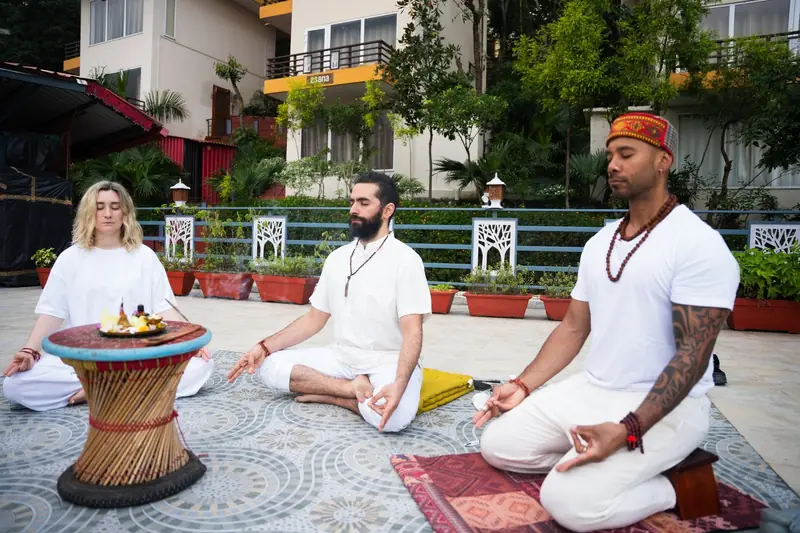
Pictured: Paige practicing by the Ganges, Rishikesh
Tejas is the inner light of transformation, the subtle fire that illuminates the mind, sharpens perception, and fuels clarity, courage and radiance.
What is Tejas?
In Ayurveda, Tejas is known as the subtle essence of Pitta dosha, the refined fire that gives rise to brilliance, intelligence and illumination.
Tejas is considered the fire of yoga, the refinement of tapas, the discipline of practice and the brightness that clarifies the mind and gives momentum in the world.
Unlike Agni, which digests food, or Pitta, which transforms matter and energy, Tejas is the subtle glow that remains once the fire has done its work. It is the radiance that shines through our eyes, skin and thoughts, the light that reveals clarity and discernment in both body and mind.
A Flame in the Dark
Think about waking before sunrise, lighting the stove, and watching the flame warm the pot, boil the water, and fill the room with the scent of tea. That light, that warmth, that refinement — that is Tejas.
Tejas is not the heat itself, but the refined light that spreads from it. It’s what brings brightness to the eyes, glow to the skin and clarity to the intellect.
Where Pitta transforms, Tejas illuminates.
The Subtle Doshas: Prana, Tejas, and Ojas
Tejas is one of three subtle essences derived from the doshas. Kapha has Ojas, Pitta has Tejas, and Vata has Prana. These are the purest forms of the doshas, the refined expressions that sustain life.
Prana (from Vata) is life-force energy - movement and inspiration.
Tejas (from Pitta) is illumination - discernment, vitality and warmth.
Ojas (from Kapha) is essence - stability, nourishment and resilience.
Each one supports the others. Too much Tejas without Ojas leads to burnout; too much Prana without Tejas leads to instability. Together, they create balance, health and spiritual evolution.
The Meaning of Tejas
The Sanskrit word Tejas (तेजस्) translates to brilliance, radiance, luminosity.
It represents the inner fire of understanding, the ability to digest not only food, but experience, emotion and knowledge.
Tejas gives us the quality of discernment to see clearly what’s right and wrong, what matters and what doesn’t. Without it, life feels foggy and confusing.
Balanced Tejas allows us to act with clarity and integrity. It’s the light of consciousness that helps us understand who we are and how to walk our dharma.
View this post on InstagramA post shared by Traditional Hatha Yoga, Meditation & Ayurveda (@omsom.yoga)
Insights from the Classical Texts
Ayurvedic texts describe Tejas as the essence that arises when digestion and transformation are in balance:
From the Charaka Saṃhitā:
“Health (Svastha) rests upon proper Agni. When transformation is correct, tissues are well formed, and radiance appears.”
And from the Aṣṭāṅga Hṛdayam:
“Signs of balanced Agni include clear intellect, strong digestion, and steady courage. Excess heat burns both tissue and mind.”
These verses reveal the importance of moderation - the flame must be steady, not overpowering. A balanced Tejas gives vitality, but when excessive, it scorches.
Signs of Balanced Tejas
When Tejas is strong and balanced, we experience:
Bright, clear eyes and glowing skin.
Warmth in the hands and feet - healthy circulation.
Sharp intellect, discernment and focus.
Kindness in speech and warmth in personality.
Courage to act with integrity.
It’s the brightness in your eyes, the warmth of your hands, the glow in your complexion and the clarity of your mind.
When Tejas is Out of Balance
Like all subtle forces, Tejas can fluctuate:
Low Tejas leads to dullness, indecision, sluggish digestion and lack of motivation.
Excess Tejas manifests as irritability, criticism, burnout or over-analysis — too much light without the stability of Ojas.
When we consume too much information without time to digest it — scrolling endlessly or over-studying — the mind burns out. The flame becomes too intense and we lose our radiance.”
Tejas thrives on clarity, moderation, and reflection, not overstimulation.
How to Cultivate Tejas
Tejas grows through discipline with compassion.
Tapas, the discipline of doing what feels hard, is how we build Tejas. For some, that’s meditation or stillness; for others, it’s strength-based asana or consistent self-study.
In both Yoga and Ayurveda, the goal is to keep the inner flame steady, not too fierce, not too dim.
In Yoga Practice:
Engage in Tapas (discipline) through consistent practice.
Practice Trāṭaka (candle-gazing meditation) to focus the mind on light.
Embrace balance - strength with softness, effort with ease.
You can have discipline in restorative practices too. Showing up for stillness every day builds Tejas as much as strong asana does.
In Ayurveda:
Support digestive fire (Agni) with warm, nourishing foods and regular meals.
Avoid overstimulation and emotional overload.
Prioritise mental digestion — journalling, reflection or mindful walks.
Study subjects that inspire and light you up, not just those that exhaust you.
When you build Tejas, you ignite the fire of yoga, the light that turns practice into understanding and life into wisdom.
Want to Learn More?
Listen to the full episode, Tejas: The Radiant Flame of Transformation, on the Om Som Yoga & Ayurveda podcast for an in-depth discussion of this vital dosha.
Ready to root your yoga practice in tradition? Join our upcoming 200-Hour Hatha Yoga Teacher Training in Sri Lanka (July 2026), a six-month immersive journey grounding you in the principles of Hatha Yoga and Ayurveda.