Svasta—The Foundation of True Health & Well-Being

Listen to this episode on Spotify →
Discover the true meaning of Svasta—not just health as absence of illness, but being deeply rooted in your authentic self. This timeless Ayurvedic concept invites us to explore well-being as a state of balance, alignment, and harmony across body, mind, and spirit.
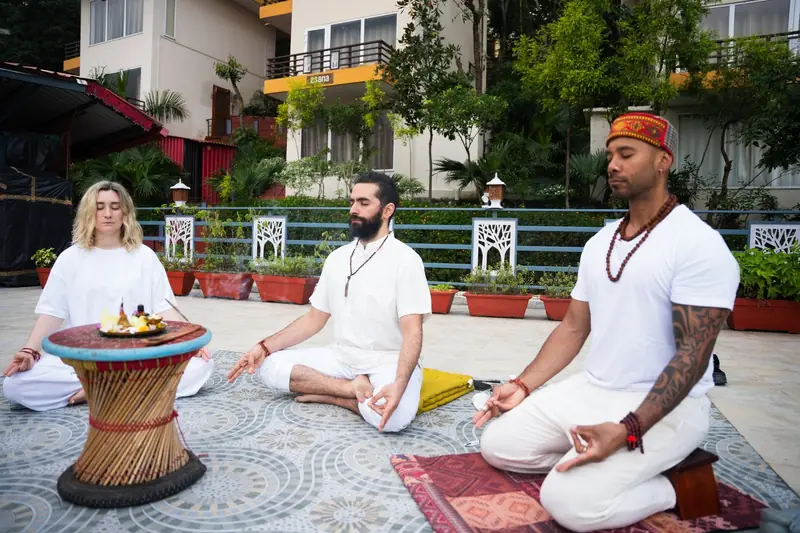
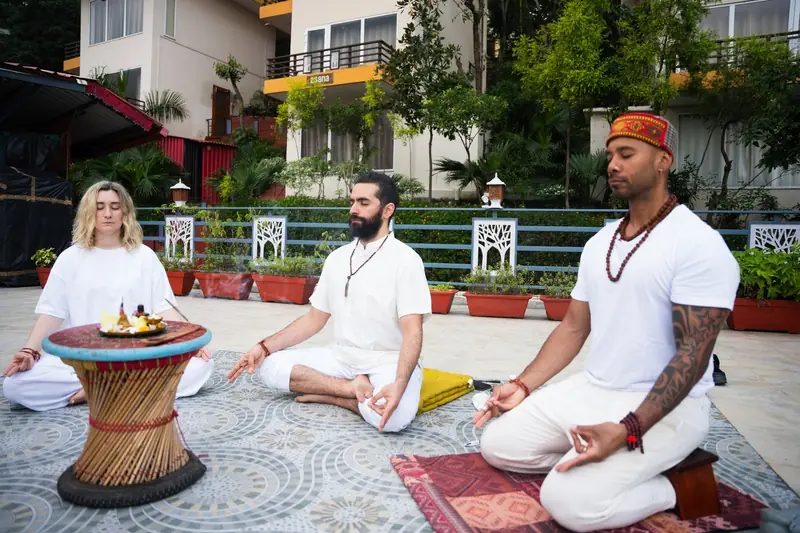
(Pictured: Aaron practicing Nadi Shodhana/Alternate Nostril Breathing)
What is Svasta?
The Sanskrit word Svasta (स्वस्थ) is often translated as health, but its deeper meaning is far more profound. Breaking it down:
Sva (स्व) – Self, one’s true nature.
Stha (स्थ) – To be firmly established, to stand, to be steady.
Thus, Svasta means "to be firmly established in the Self." In Ayurveda and Yoga, health is not simply the absence of disease—it is a state of living in complete alignment with one’s true nature, in harmony with body, mind, and spirit.
"Svasta is not just about the body. It’s about being deeply rooted in who you are." – Aaron Petty
Health as a State of Being, Not Just a Condition
Ayurveda defines Svasta as a dynamic balance between the physical body, the mind, the senses, and the higher Self. One of the most referenced definitions of health in Ayurvedic texts comes from the Sushruta Samhita (Chapter 15, Verse 48):
समदोषः समाग्निश्च समधातुमलक्रियः।प्रसन्नात्मेन्द्रियमनाः स्वस्थ इत्यभिधीयते॥
Samadoṣaḥ samāgniśca samadhātumala-kriyaḥ |Prasannātmendriya-manāḥ svastha ityabhidhīyate ||
Translation: "One whose doshas (bio-energies) are balanced, whose digestive fire is steady, whose tissues and waste functions are in harmony, and whose Self, senses, and mind are blissful—this one is called svasta (healthy).”
This definition shows that Ayurveda sees health not just as a biological state, but as a holistic experience of well-being.
Health and Dharma: The Path to Alignment
In your previous podcast episode on Dharma, you discussed how living in alignment with one’s true path naturally cultivates well-being. Svasta is an extension of that concept—when we live in accordance with nature, we experience ease (sukha). When we go against our nature, we experience dis-ease (duhkha).
As Paige mentioned in the podcast:
“Your body wants to be in a state of health. It’s always moving in that direction, we just have to support it.”
This echoes the wisdom of the Bhagavad Gita (6.17), which reinforces balance as the key to well-being:
युक्ताहारविहारस्य युक्तचेष्टस्य कर्मसु |युक्तस्वप्नावबोधस्य योगो भवति दुःखहा ||
Yuktāhāra-vihārasya yukta-ceṣṭasya karmasu |Yukta-svapnāvabodhasya yogo bhavati duḥkha-hā ||
Translation: "For one who is moderate in food and recreation, balanced in work and rest, and disciplined in sleep and wakefulness—such a person finds that Yoga destroys all suffering.”
The Link Between Health and Self-Realisation
In the podcast, Aaron and Paige spoke about the idea that every cell in your body is listening to your thoughts.
Aaron explained:
“If you are firmly established in the higher Self—capital S—then your entire system will align with that. But if you are rooted in disease, your body will respond accordingly.”
This reflects the Yogic principle that our physical health is directly influenced by our state of mind and our connection to Self.

Listen to this episode on Spotify →
(Pictured: Paige offering Abhyanga, a traditional Ayurvedic massage involving the application of warm, herb-infused oil to the entire body)
How to Cultivate Svasta in Daily Life
1. Honour the Rhythms of Nature
Follow the daily cycles (dinacharya) and seasonal cycles (ritucharya).
Align your sleep, work, and food habits with natural rhythms.
2. Strengthen Digestion & Nourish the Body
Good health starts with Agni (digestive fire).
Eat mindfully—what you consume literally becomes you.
“The food you eat becomes the tissues of your body and the consciousness of your mind.” – Paige, Om Som Podcast
3. Choose Actions that Move You Toward Health (Samyoga & Viyoga)
Samyoga (संयोग) – The actions that bring us toward connection, vitality, and joy.
Viyoga (वियोग) – The actions that take us away from balance and health.
Paige described this as:
“Do more of the things that nourish you and less of the things that take you away from balance. Your body already knows what you need.”
4. Shift Your Perspective on Health
Health is not just a number on a scale or an external appearance.
It is about feeling ease, energy, and connection to Self.
Aaron shared:
“What if we stopped seeing health as an aesthetic and started seeing it as an experience?”
5. Practice Yoga & Meditation with Awareness
Yoga is not separate from Ayurveda—it is an essential part of holistic health.
Meditation helps you witness your mind and body, allowing deeper healing.
6. Patience & Faith in the Process
Healing takes time.
Be patient and trust your capacity to restore balance.
Aaron summed it up beautifully in the episode:
“You didn’t build your habits overnight, so don’t expect to undo them overnight. Just take it one step at a time.”
Final Thoughts: Svasta as the Key to Balance
Svasta is not just about "feeling good"—it is about being deeply rooted in your essential nature. It is a return to who you truly are beneath the distractions of modern life.
“Health is not just the absence of disease—it is ease, joy, and alignment with your truest Self.”
By integrating Ayurvedic wisdom and Yogic practices, we move toward a state where health becomes a natural byproduct of living in harmony with ourselves and the universe.
So, ask yourself:
What am I choosing today—alignment or disconnection?
What does Svasta feel like in my own body?