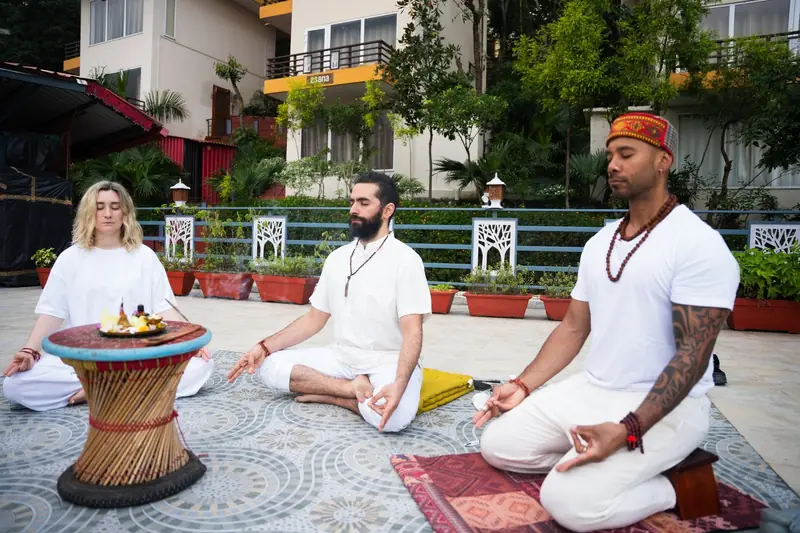
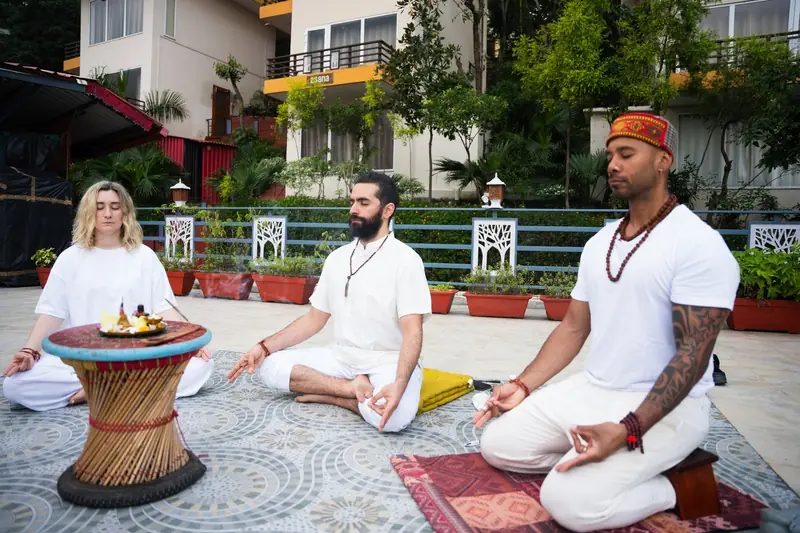
Sattva: The Quality of Clarity, Kindness & Presence
Listen to this episode on Spotify →
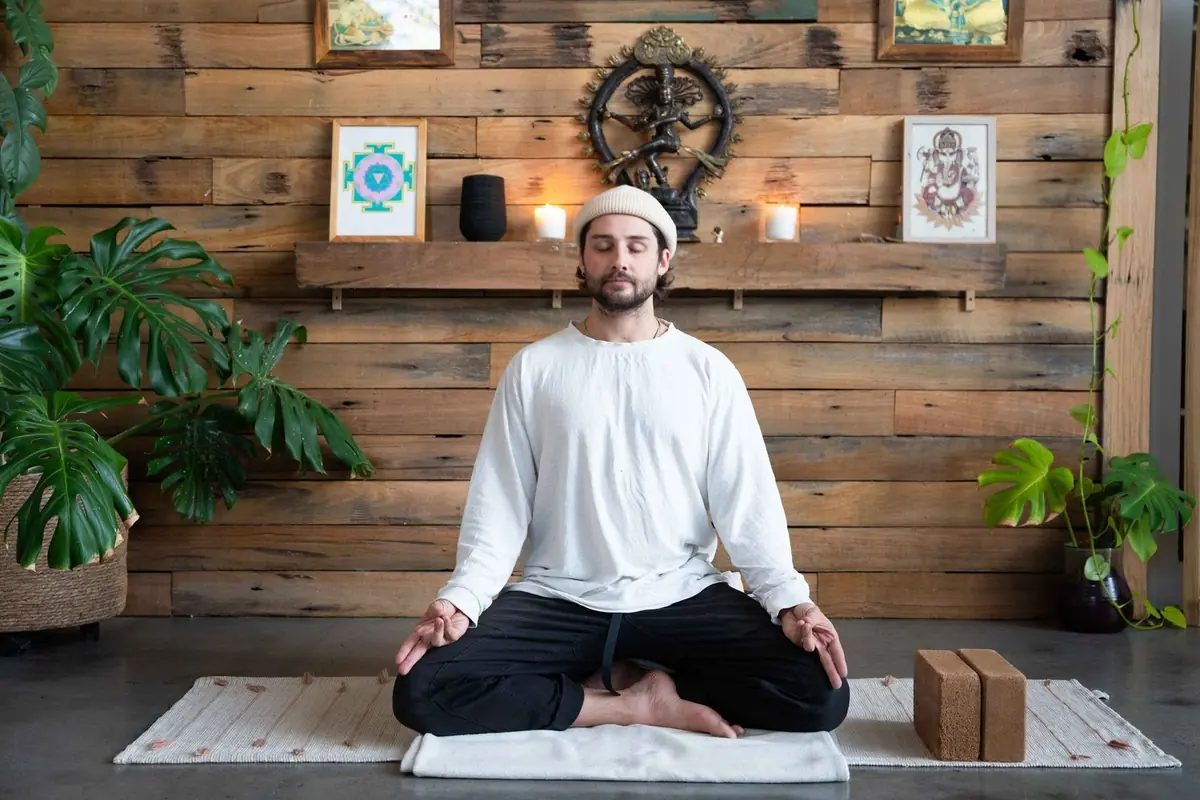
Pictured: Aaron practicing Samyama: Dharana (concentration), Dhyana (meditation) and Samadhi (absorption) to focus the mind on a single object.
Sattva is the luminous quality of the mind - clarity, kindness, and presence. Explore how yoga, pranayama, meditation, and Ayurvedic living cultivate harmony within the Mahāguṇas and lead us toward balance in body, mind, and spirit.
The Empty Cup: A Story of Clarity
A Zen master once poured tea for a visiting professor, filling the cup until it overflowed.
The professor exclaimed, “It’s full — no more will go in!”
The master smiled and replied, “Like this cup, you too are full - full of opinions and ideas. How can I show you Zen unless you first empty your cup?”
This story beautifully captures the essence of Sattva, the state of mind that is empty of assumptions, luminous, and clear. In Yoga and Ayurveda, Sattva represents the quality of balance, harmony, and truth. It is the foundation upon which higher wisdom unfolds.
“Sattva is the mind which is luminous, clear, and filled with harmony and ease.”
Understanding the Mahāguṇas
In the Sāṃkhya philosophy, all of creation is woven from three universal qualities - the Mahāguṇas:
Sattva – lightness, clarity, harmony
Rajas – movement, activity, passion
Tamas – inertia, heaviness, darkness
The word Guṇa literally means “that which binds.” These three qualities are constantly interacting within us - shaping the mind, body, and energy.
When Rajas dominates, we feel restless and overstimulated.
When Tamas dominates, we feel dull or unmotivated.
But when Sattva arises, the mind becomes still, radiant, and receptive to truth.
“Sattva is the perfect harmony - the balance of Rajas and Tamas.”
The Meaning of Sattva
The word Sattva comes from Sat (truth, being) and Tva (quality or essence).
It literally means “the quality of truth.”
Sattva is what makes the mind fit for knowledge, not just intellectual understanding, but direct experience. It’s the clarity that allows us to perceive things as they really are, without distortion or emotional colouring.
“When everything is clear and the breath is steady, and we align ourselves with Dharma - the natural flow of the world - we are considered Sattvic.”
In the Sāṃkhya Kārikā, Sattva is described as “light, lucid, and buoyant - associated with pleasure and clarity of mind.”
View this post on InstagramA post shared by Traditional Hatha Yoga, Meditation & Ayurveda (@omsom.yoga)
Signs of a Sattvic Mind
A predominance of Sattva in the mind feels like calm alertness - a state of inner peace that is both grounded and awake.
When Sattva is present, you may notice:
A bright, clear complexion and steady eyes
Kindness in speech and thought
Tolerance and compassion toward others
A tidy, harmonious environment
A capacity for both Abhyāsa (consistent practice) and Vairāgya (non-attachment)
In contrast, when Sattva is low:
Excess Rajas manifests as restlessness, irritability, or over-commitment.
Excess Tamas shows up as heaviness, dullness, or procrastination.
The key is not to reject Rajas or Tamas, but to balance them. As Aaron explains:
“Sattva isn’t about stripping everything away. It’s about finding the balance of Rajas and Tamas that allows you to live fully in the world.”
Cultivating Sattva in Practice
In Āsana (Physical Practice):
Choose symmetrical sequences and balanced postures.
Alternate between movement and stillness.
Allow pauses between asanas to notice the energetic effects.
Maintain a steady Drishti (gaze) — still eyes reflect a still mind.
“The Sattva creeps in through the clarity of awareness — the moment you pause and observe.”
In Prāṇāyāma (Breathwork):
Favour balancing techniques such as Nāḍī Śodhana (alternate-nostril breathing) or Sama Vṛtti (equal ratio breathing).
Avoid overly stimulating practices like Kapalabhāti when seeking calm.
Explore Bhrāmarī (humming bee breath) to draw the senses inward and cultivate inner harmony.
In Meditation:
Contemplate the Four Bhāvanas (Yoga Sūtra I.33): Kindness, Compassion, Joy, and Equanimity.
Use a mantra to anchor the mind in single-pointed awareness.
Rest your awareness in the heart - the seat of clarity beyond thought.
Sattva in Daily Life & Ayurveda
In Ayurveda, Sattva is cultivated through intention and mindful living.
Choose foods, environments, and activities that support lightness, clarity, and joy:
Eat warm, well-spiced, seasonal meals prepared with love.
Favour fresh, organic, and unprocessed foods.
Maintain consistent routines - rise with the sun, rest before midnight.
Spend time in nature, sunlight, and uplifting company.
Limit overstimulation and screen time.
“You can eat Sattvic foods or do Sattvic practices, but if your intention is to compete or achieve, you’re cultivating Rajas - not Sattva.”
Ultimately, Sattva is less about what we do and more about how we do it - with awareness, compassion, and simplicity.
Reflection Practice: Reconnecting to Sattva
Place one hand on your heart.
Take a slow breath in through the nose and a soft breath out.
Relax your jaw, your shoulders, your face.
Ask yourself gently: “What is the most truthful, simple action I can take next?”
Then open your eyes, and do just that.
This is the essence of living a Sattvic life — acting from clarity and presence.
Want to Learn More?
Listen to the full episode, How to Cultivate Sattva Through Yoga & Ayurveda, on the Om Som Yoga & Ayurveda podcast for an in-depth discussion.
Ready to root your yoga practice in tradition? Join our upcoming 200-Hour Hatha Yoga Teacher Training in Sri Lanka (July 2026), a six-month immersive journey grounding you in the principles of Hatha Yoga and Ayurveda.