Ojas - The Essence of Vitality and Resilience
Listen to this episode on Spotify →
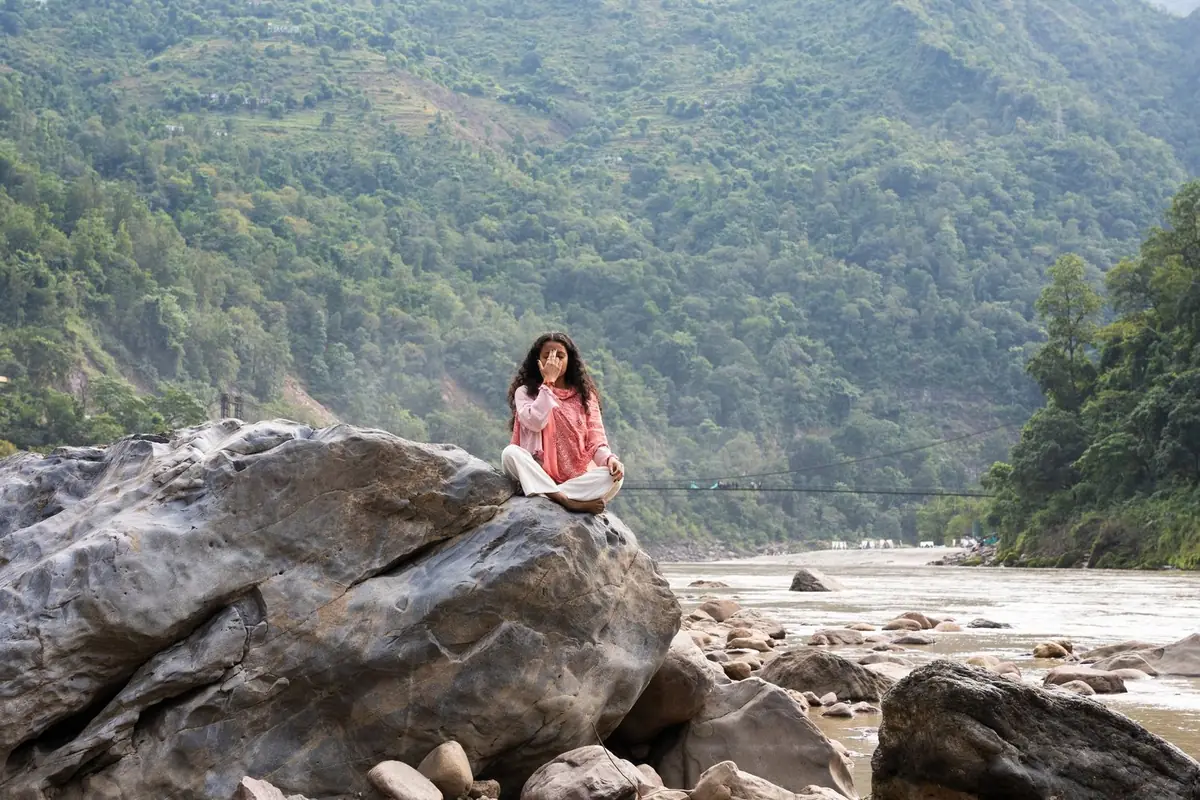
Pictured: Soilau practicing Nadi Shodhana by the Ganges River, Rishikesh
Ojas is the deep reserve of life force within us, the subtle essence that nourishes our body, steadies our mind and sustains our spirit.
The Subtle Essence of Life
In Ayurveda, Ojas is considered the pure essence of Kapha dosha, the stabilising water and earth elements that give structure, strength and endurance to the body.
As Aaron explains in the episode:
“Ojas is the deep reserve of the body, the essence of nourishment that lives within us.”
It is our vital essence, the subtle sap that holds us steady through life’s cycles of activity and rest. Ojas governs immunity, stamina, patience, and peace, allowing us to move through life with calm resilience and inner contentment.
The Rain and the Soil: A Visual for Ojas
Paige offers a simple visual to understand Ojas:
“Imagine a slow, steady rain at the end of winter that nourishes the earth. The soil becomes fertile, holding moisture at the roots so new growth can bloom in spring. That nourishment in the soil, that’s Ojas.”
Where Tejas is the warmth of the sun that draws life upward, and Prana is the movement of the plants as they grow, Ojas is the moisture that feeds them all.
It is the foundation of vitality, the reserve that allows you to meet each day with steady energy and inner nourishment.
The Meaning of Ojas
The Sanskrit word Ojas (ओजस्) translates as strength, vigour, and vitality.
It is the byproduct of healthy digestion and tissue formation (Dhātu Agni), formed when all seven bodily tissues (Sapta Dhātus) are well nourished.
Paige explains:
“When digestion moves properly through the seven tissues, the final product is Ojas, the body’s vitality. It’s what allows us to heal, to endure and to feel content.”
Ojas is thus both physical (linked to immunity and strength) and spiritual (linked to stability, compassion and inner joy).
Ojas in the Classical Texts
Ayurveda describes Ojas as the very essence of life.
From the Charaka Saṃhitā:
“Ojas is the essence of the tissues; its loss leads to collapse, while its presence confers strength and colour.”
The text also speaks of six golden drops of Ojas that reside in the heart, the storehouse of our vitality and consciousness. These are said to be non-replenishable, meaning they must be protected through moderation and care.
Aaron expands:
“There’s another form of Ojas that circulates through the system. This type is replenishable, we can build it and nourish it through rest, food and self-care.”
This duality reminds us that Ojas is both finite and renewable: while our deepest reserves must be protected, our circulating Ojas can be continually replenished through balanced living.
View this post on InstagramA post shared by Traditional Hatha Yoga, Meditation & Ayurveda (@omsom.yoga)
Signs of Balanced Ojas
When Ojas is strong and flowing freely, we experience:
Robust immunity and quick recovery from illness or injury
Deep, restorative sleep
Calmness, patience and emotional stability
Steady energy and enthusiasm for life
Warmth, softness and contentment in the body and mind
Paige summarises beautifully:
“Ojas feels like softness in your life like the warmth of a hug or the comfort of your bed. It’s that sense of safety and ease that allows you to rest deeply.”
Signs of Depleted Ojas
When Ojas becomes depleted, the body and mind lose their resilience. Signs may include:
Frequent illness, allergies or slow recovery
Fatigue or burnout
Anxiety, restlessness and difficulty sleeping
Dryness of the skin or mucous membranes
Overwhelm, impatience or emotional instability
Aaron explains:
“When Ojas is low, we start to feel scattered and ungrounded - there’s nothing holding everything together. Rest becomes shallow and fatigue takes over.”
How to Build Ojas
Ojas is built through nourishment, rest, and love — not through effort or intensity.
Paige calls this the art of luxurious self-care:
“Building Ojas is about slowing down, finding softness, and indulging in rest with awareness.”
Yoga for Ojas
Practice restorative or Yin yoga to slow the body and calm the nervous system.
Favour gentle breathwork (such as Nāḍī Śodhana or Chandra Bhedana) over forceful techniques.
Meditate on love and compassion (Metta Bhavana or the Four Keys of the Heart).
Engage in Yoga Nidra to restore energy reserves from deep within.
Ayurveda for Ojas
Practice Abhyanga (daily self-massage) with warm sesame or medicated oils.
Follow Dinacharya, a daily rhythm that includes nourishment, rest, and mindful routine.
Eat sweet, warm, and grounding foods: ghee, dates, stewed fruits, soups, dahls, and high-quality dairy.
Spend time in nature and seek heart-centred relationships - love and connection are potent Ojas builders.
Aaron adds:
“Anything that feels like a warm hug, a bowl of soup, time in nature, connection with loved ones - that’s what builds Ojas.”
Ojas, Tejas, and Prana: The Sacred Trio
Ojas, Tejas, and Prana work together as the subtle forces of vitality:
Ojas provides stability and nourishment (Kapha).
Tejas offers clarity and transformation (Pitta).
Prana gives movement and inspiration (Vata).
Aaron describes it beautifully:
“Ojas is the container for Tejas and Prana. Without Ojas, the light burns too fast or lifts off into space. It’s the foundation that holds everything steady.”
When these three are balanced, we feel both grounded and luminous, steady yet alive.
Reflection: The Art of Enough
To protect Ojas is to live with moderation, gratitude, and ease.
As Aaron concludes:
“We can protect our Ojas simply by saying no to excess — excess doing, excess consuming, excess striving. Do less, so you can be more.”
Building Ojas is not a one-time act, but a lifelong devotion to nourishment, the quiet art of replenishing our reserves through consistency, rest, and love.
Want to Learn More?
Listen to the full episode, Ojas: The Essence of Vitality and Resilience, on the Om Som Yoga & Ayurveda podcast for an in-depth discussion.
Ready to root your yoga practice in tradition? Join our upcoming 200-Hour Hatha Yoga Teacher Training in Sri Lanka (July 2026), a six-month immersive journey grounding you in the principles of Hatha Yoga and Ayurveda.