Langhana & Pranayama: Why Yoga Begins With The Exhale
Listen to this episode on Spotify →
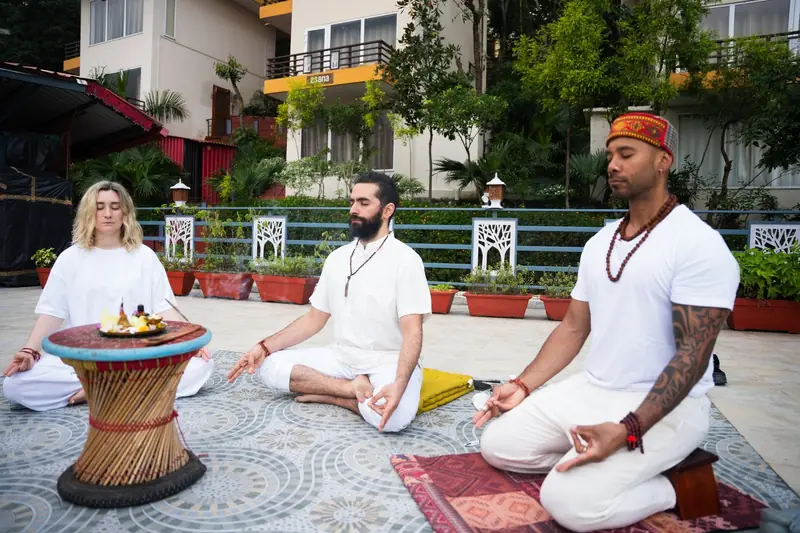
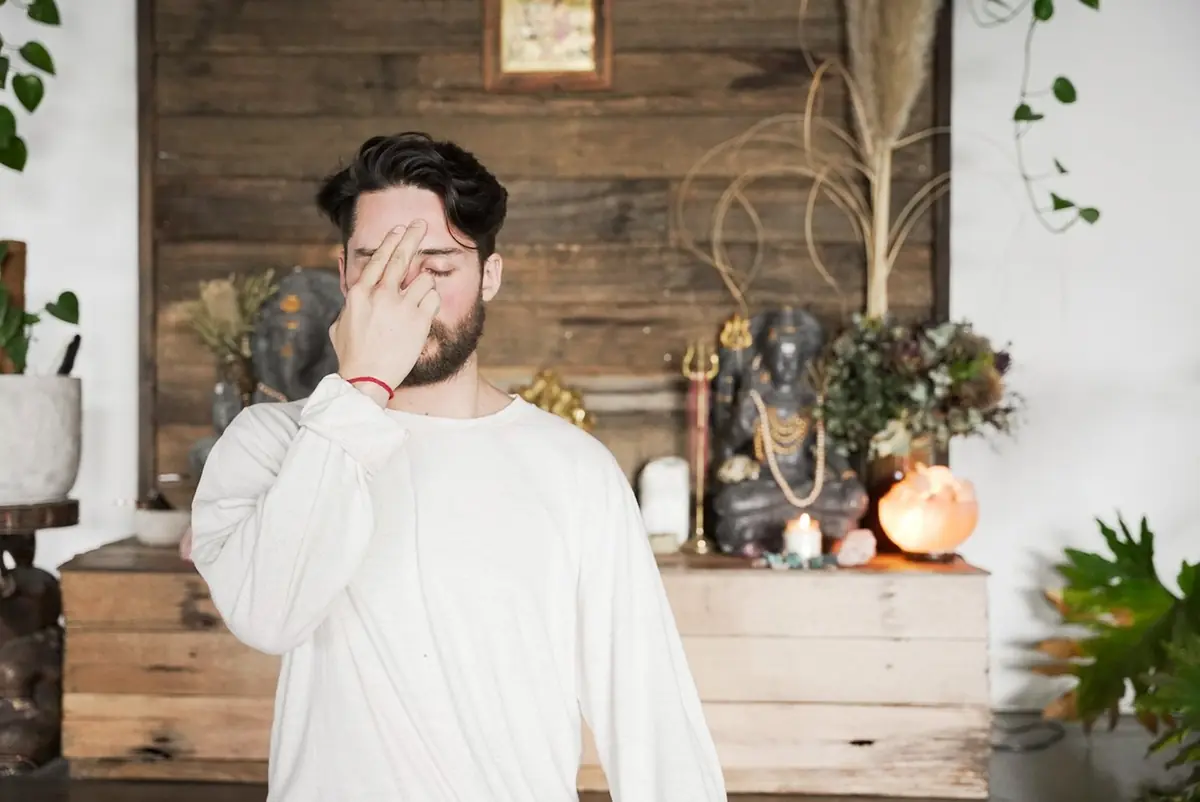
Pictured: Aaron practicing pranayama
Langhana is the yogic principle of slowing down, where calming the breath becomes the foundation for grounding the nervous system and restoring balance in both practice and daily life.
Introduction
Have you ever noticed how difficult it can feel to slow down your breath? The moment things get quiet, the breath wants to rush. What we often label as anxiety, restlessness, or a busy mind is usually excess energy with nowhere to land. Langhana offers a simple and deeply effective approach by focusing on breathing less rather than more, allowing the system to settle naturally and creating the foundation for sustainable yoga practice.
What Is Langhana
Langhana comes from the Sanskrit root lang, meaning to lighten, reduce, or alleviate. In yoga and Ayurveda, Langhana refers to practices that calm, descend, and slow energy when there is excess stimulation in the body or mind. Rather than being a single technique, Langhana describes an energetic effect. When the energy settles, the breath slows, the nervous system downregulates, and clarity becomes accessible again.
Langhana And The Breath
In pranayama, Langhana is cultivated by prioritising the exhalation. Many modern breath practices emphasise large inhalations and energising techniques, yet classical yoga begins with learning how to exhale fully. As shared in the podcast, regulation of the movement of inhalation and exhalation is the definition of pranayama, and this regulation always begins with the breath leaving the body. When the exhale lengthens, the nervous system receives a signal of safety and the mind begins to quieten.
Pranayama Is About Energy, Not Breath
One of the key clarifications in this episode is the distinction between breathwork and pranayama. Breathwork focuses on the breath itself, while pranayama works with prana, the vital energy that rides on the breath. Prana is not the breath, and these terms are not interchangeable. By shaping the breath with intention, particularly through slower and longer exhalations, we influence the movement of energy and create a grounding, calming effect throughout the system.
The Classical Order Of Pranayama
According to the Yoga Sutras, pranayama is taught in a specific order: exhalation first, inhalation second, and retention last. This sequence is essential. When pranayama becomes established, the breath naturally becomes deep and subtle. A subtle breath is not shallow breathing in the chest, but a full diaphragmatic breath that moves deeply into the body while remaining quiet and refined at the nostrils. This quality of breath reflects expanded prana and a settled nervous system.
Langhana In Asana And Meditation
Langhana is not limited to seated breathing practices. In asana, slowing the transitions between postures, pausing in stillness, and allowing the breath to lead movement all create the same calming effect. In meditation, focusing on stable and grounding objects, such as the image of a mountain, allows the mind to absorb those same qualities of steadiness and calm. Langhana is always the result of orienting practice toward settling rather than stimulating.
View this post on InstagramA post shared by Traditional Hatha Yoga, Meditation & Ayurveda (@omsom.yoga)
When Slowing Down Feels Uncomfortable
Many people find extended exhalations uncomfortable at first, feeling restricted or short of breath. This is not failure but information. The discomfort reflects an imbalance in the nervous system rather than a problem with the practice itself. Over time, as tolerance to carbon dioxide increases, the body becomes more comfortable with slower breathing, leading to deeper calm and greater capacity for stillness.
Langhana In Daily Life
The effects of Langhana extend beyond the mat. Practitioners often notice they respond differently to everyday situations, such as traffic or busy environments, with less reactivity and more ease. This is one of the earliest signs that yoga is working. Calm becomes a choice rather than something dependent on external circumstances, and this sense of agency is one of the great gifts of practice.
Key Takeaways
Langhana is the principle of calming and slowing energy rather than stimulating it. Pranayama begins with learning how to exhale fully and slowly. Extended exhalations signal safety to the nervous system and settle the mind. Langhana is an energetic effect, not a single technique. When calm is established, yoga becomes sustainable and integrated into daily life.
Want to Learn More?
Listen to the full episode, Langhana: A Practical Guide to Down-Regulating the Nervous System, on the Om Som Yoga & Ayurveda podcast for an in-depth discussion.
Ready to root your yoga practice in tradition? Join our upcoming 200-Hour Hatha Yoga Teacher Training in Sri Lanka (July 2026), a six-month immersive journey grounding you in the principles of Hatha Yoga and Ayurveda.