Lahiri - Learn to Move Like Water
Listen to this episode on Spotify →
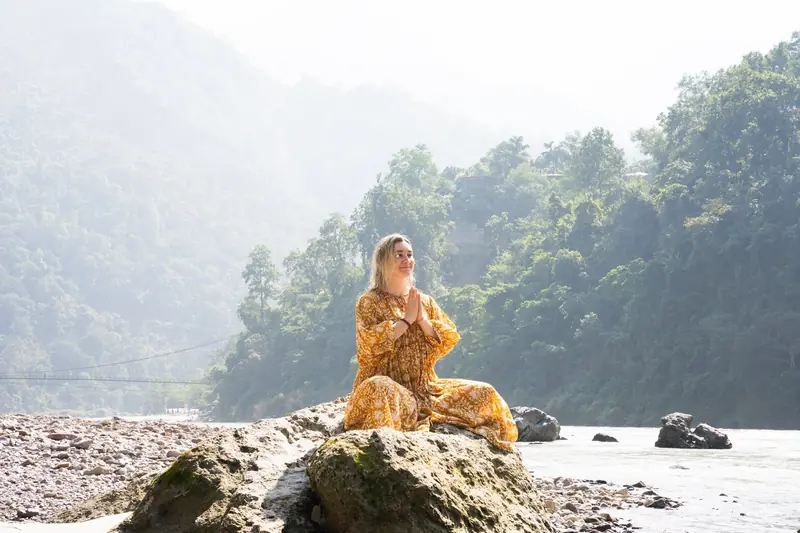
Pictured: Soilau by the healing waters of the Ganges River, Rishikesh
Have you ever noticed how some people can hold strong poses, yet freeze the moment movement is required. There is strength, but no adaptability. The body grips instead of responding. We often assume that fluid movement means being loose or uncontrolled, but in yoga, true flow only emerges when the body feels supported enough to soften. This teaching is known as Lahiri, movement as a wave rather than force.
What Is Lahiri?
Lahiri comes from the Sanskrit root lahar, meaning to oscillate or undulate. Lahiri is commonly translated as wave or ripple. It describes a quality of movement that is continuous, rhythmic, and responsive. Not erratic or collapsed, but intelligent and adaptable. In practice, Lahiri refers to the way the body transitions between postures with ease, allowing movement to reorganise itself rather than resist.
The Story Of The River
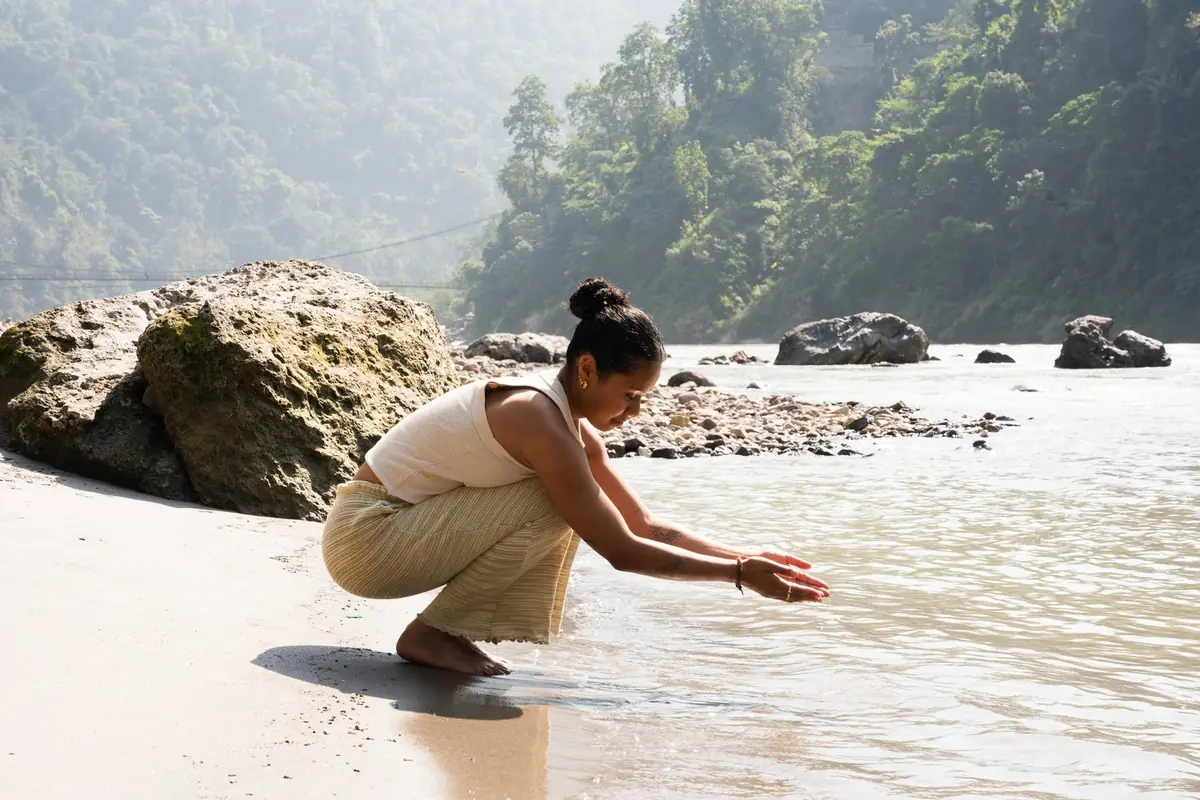
A Zen story helps illuminate this principle. A student once complained to his teacher that his practice felt rigid and tight. The teacher led him to a river and asked him to observe. The water flowed effortlessly around rocks, bending and adapting without losing its direction. The teacher said, you are trying to be like the rock, but the practice is to become like the river. In yoga, the body is not meant to be fixed like a statue. It is meant to be steady, yet responsive.
Stability Before Flow
Lahiri does not reject strength or steadiness. In fact, it depends on them. Stability creates trust. Trust allows movement. When the body feels grounded, it can soften without collapsing. This is why Lahiri follows the work of sthiram, steadiness. Once the foundation is established through the feet, legs, and pelvis, the spine is free to move like a wave. Fluidity arises not from looseness, but from intelligent support.
The Spine As A Wave
The spine is not one rigid structure. It is a series of joints designed to articulate. Lahiri teaches us to move the spine sequentially rather than as a single piece. This is expressed through spinal waves, where movement initiates from the sacrum and travels through the vertebrae. In transitions such as forward folds, backbends, or namaskar sequences, each segment responds in turn, creating a visible and felt wave of motion.
The Role Of The Sacrum
The sacrum is the bridge between the upper and lower body. When it is rigid, movement becomes stiff. When it is unstable, support is lost. When the sacrum moves rhythmically, it allows freedom with integrity. This movement also supports the flow of cerebrospinal fluid, which nourishes the brain and nervous system. Gentle wave-like motion of the spine acts as a pump, hydrating tissues and supporting neurological health.
View this post on InstagramA post shared by Traditional Hatha Yoga, Meditation & Ayurveda (@omsom.yoga)
Breath As The Tide
Breath and movement are inseparable in Lahiri. The inhale lifts and expands, the exhale softens and folds. When breath length matches the movement, the practice becomes calm and absorbing. This is not flow as speed or intensity, but flow as continuity. Like the ocean, the breath comes in and goes out, guiding the rhythm of the body.
Lahiri Beyond The Mat
Off the mat, Lahiri shows up as emotional adaptability. It is the capacity to feel without becoming rigid, to change without losing stability. When we trust our foundation, we allow emotions to move through us rather than get stuck. Life becomes less about control and more about responsiveness. Change feels less shocking because adaptability has been practiced in the body.
Practicing Lahiri
In practice, Lahiri invites us to do less, not more. Reduce the depth of a pose so movement remains possible. Allow subtle circular motion in joints. Explore spinal waves in cat and cow, namaskar, or simple transitions. Let the breath guide the pace. Notice where you grip and experiment with softening without collapsing.
Key Takeaways
Lahiri teaches that true flow comes from stability, not force. Movement becomes nourishing when it is wave-like, responsive, and supported. By learning to move like water, we cultivate adaptability in the body, breath, and life itself.
Want to Learn More?
Listen to the full episode, Lahiri: Undulating Movement Through the Spine, on the Om Som Yoga & Ayurveda podcast for an in-depth discussion.
Ready to root your yoga practice in tradition? Join our upcoming 200-Hour Hatha Yoga Teacher Training in Sri Lanka (July 2026), a six-month immersive journey grounding you in the principles of Hatha Yoga and Ayurveda.